

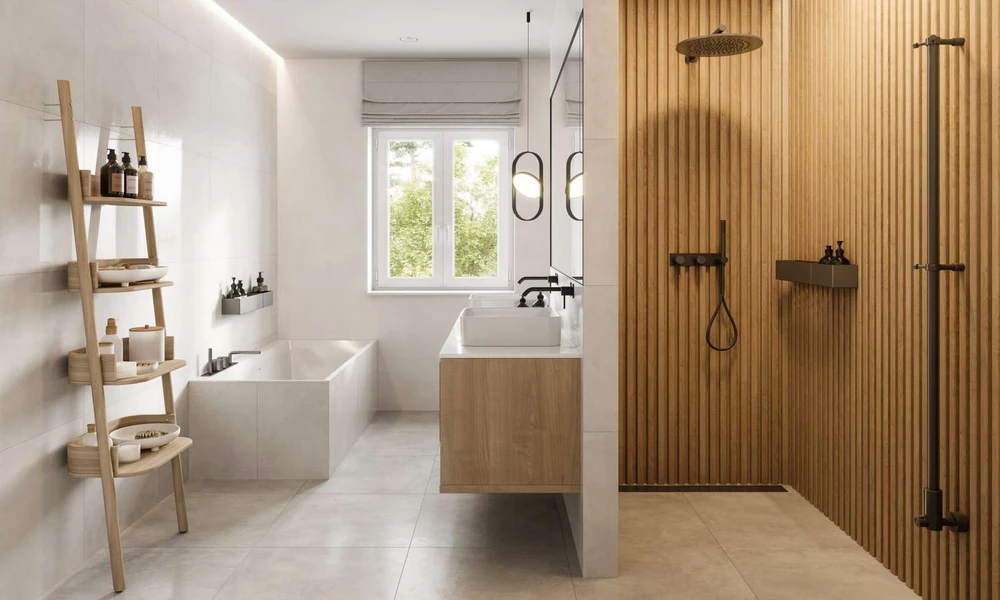
Most bathroom projects stall at the same point: the owner knows the room isn’t working but can’t tell whether it needs a weekend of cosmetic work or a full gut. The answer usually depends on one thing. Is the problem on the surface, or is it built into where the fixtures sit and how water leaves the room? Surface problems are cheap to solve. Layout problems are not, and no amount of new paint will fix a toilet crammed beside a door swing.
Cary has a particular version of this dilemma. A large share of its homes went up during the growth years between the mid 1980s and the late 2000s, in neighborhoods built fast and to a similar template. Primary baths from that era often feature a large corner garden tub, a cramped fiberglass shower stall, builder grade oak or white thermofoil vanities, and a single ceiling fan venting into the attic. Secondary baths tend to have a tub and shower combo with a fiberglass surround. These rooms are now thirty to forty years old, and the components are aging at different rates, which is exactly why a step by step approach helps.
Before choosing a rung, it helps to know who can handle every level if the project grows. For Bathroom Remodels in Cary, Chatham Custom Homes brings the perspective of a builder that also does kitchens, additions, whole house renovations, and new custom homes across the Triangle, so a bathroom that turns out to need framing, drain relocation, or extra square footage doesn’t have to change hands halfway through. Sending a few photos of your current bathroom through their contact form is an easy way to find out which rung your space actually belongs on.
Rung One: Cosmetic Refresh
The lowest rung changes how the room looks and feels without touching water lines. Paint, new cabinet hardware, a larger framed mirror, updated light fixtures, and fresh silicone caulk around the tub all fall here. So does replacing towel bars and toilet paper holders in a matching finish, which does more for a dated room than most people expect.
One upgrade at this level deserves more attention than it gets: the exhaust fan. Original fans in homes from this period are often loud, undersized, and ducted poorly, so people stop running them. That leads to peeling paint, mildew on the ceiling, and swollen vanity edges. A quieter fan with a humidity sensor that switches on automatically is a small job that protects everything else in the room. If the duct simply dumps into the attic rather than venting outside, fixing that is part of the same visit.
Rung Two: Fixture Swaps in the Same Spots
The next step replaces fixtures without moving them. A new faucet, a comfort height toilet, a new showerhead and trim kit, or a vanity of the same width all qualify, because the drains and supply lines stay where they are. This rung is where water efficiency upgrades usually happen, since older toilets and showerheads use far more water than current models.
The catch is that swapping a vanity often reveals trouble below. Flooring may not extend under the old cabinet, meaning a new vanity with a different base footprint exposes a gap. Shutoff valves from this era are frequently the multi turn type that seize or drip once disturbed, so replacing them with quarter turn valves is sensible while the lines are accessible.
Rung Three: New Surfaces on the Existing Layout
This level strips floors and walls down to the substrate while keeping the plumbing layout. It includes new tile floors, a tiled shower replacing a fiberglass surround, and the most requested project in suburban Cary right now: the tub to shower conversion in a secondary bath, using the existing drain location.
Current trends at this rung include large format porcelain tile with fewer grout lines, niches built into the shower wall instead of corner caddies, glass panels instead of curtains, and warmer finishes such as wood look tile, brushed brass, and textured handmade style tile on accent walls. Heated floor mats are also easiest to add here, since the floor is already open.
The most important work at this level is invisible. Tile is not waterproof, so a proper membrane behind and beneath the shower is what determines whether the job lasts. Older showers built with just cement board and grout often show hidden rot once the walls come off, and subfloor repairs near the toilet flange are common in homes of this age.
Rung Four: Layout Changes Within the Same Footprint
Moving fixtures is where cost and complexity jump. Relocating a toilet or shifting a shower drain means opening the floor, rerouting drain lines with correct slope, adjusting vents, and pulling permits for the plumbing and electrical changes. Homes built on crawl spaces, which are common in Cary, make this easier than slab foundations, where concrete has to be cut.
This is the rung for removing the dated garden tub in a primary bath and reclaiming that corner for a large walk in shower, a double vanity, or a freestanding tub in a better position. It is also where curbless showers become possible. A true zero threshold entry requires recessing the shower floor into the subfloor, which means reframing joists or lowering the floor structure. The payoff is a room that works for aging in place, with wider clearances, blocking in the walls for future grab bars, and a doorway that can take a wider door.
Rung Five: Expanding the Room Itself
The top rung grows the bathroom beyond its current walls. That can mean absorbing an adjacent linen closet, merging a small hall bath with an unused bedroom closet, or building an addition that creates an entirely new primary suite. In two story homes where the owners want main floor living for the long term, adding a first floor bedroom and bath is increasingly common.
Projects at this level involve structural framing, possible load bearing wall changes, roof and foundation tie ins for additions, and HVAC adjustments so the new space is conditioned properly. They also tend to connect to other rooms, which is why many owners fold them into broader renovations rather than treating them as standalone bathroom work.
Choosing Where to Stop
A useful rule is to identify the highest rung your main complaint requires, then check whether the rungs below it are worth doing at the same time. If the shower leaks, surfaces are the minimum, and fixture swaps cost little extra while the room is open. If the layout itself is the problem, cosmetic spending is money you will tear out later. Matching the rung to the real problem keeps the budget honest and the result lasting.