

If you kayak often, you already know that getting on the water is not always the easy part. Launching from a high fixed dock, a seawall, or a muddy shoreline can turn a simple outing into a balancing act. One wrong shift of weight, and suddenly you are half in the boat, half in the water, wondering why it felt harder than it should.
That is exactly why a floating kayak dock and launch is such a smart solution. It is not just a place to park a kayak. It is a purpose-built structure designed to make launching and returning easier, safer, and more comfortable. In places with changing water levels, soft shorelines, or frequent daily use, a floating launch often works much better than a traditional fixed setup.
Why a Floating Kayak Dock Makes Sense
The biggest advantage of a floating kayak dock is that it rises and falls with the water. A fixed dock may sit too high above the boat one day and too close the next, depending on tide, rainfall, or seasonal water changes. A floating system keeps a more consistent relationship between the dock and the kayak, which makes boarding easier.
That matters more than people think. The hardest part of getting into a kayak is usually the transfer of weight. If the dock and the boat move differently, you are more likely to wobble or lose balance. When both float together, the transition feels smoother and more controlled.
A floating dock also helps protect your kayak. In shallow or muddy areas, fixed docks can leave boats dragging in muck or scraping against rough edges when the water drops. A floating launch helps keep the kayak supported and better positioned in usable water.
Common Types of Floating Kayak Launches
Not every floating launch works the same way. The best option depends on your boat, your shoreline, and how you plan to use it.
A low-profile drive-on launch sits close to the water and often includes a V-shaped or U-shaped entry. This makes it a great choice for sit-inside kayaks and longer recreational boats because the hull stays centered as you slide in.
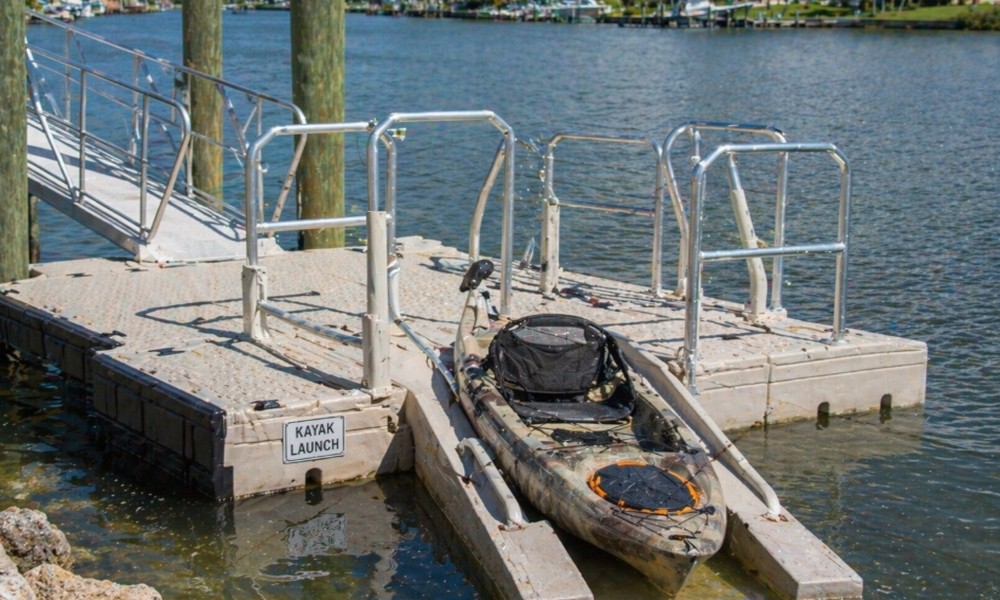
A chute-style launch with handrails is one of the most user-friendly options. It includes a recessed center lane or narrow channel that holds the kayak in place while you board. Handrails on one or both sides provide stability and give paddlers extra support during entry and exit. This style works especially well for beginners, older users, or anyone who wants more confidence while launching.
A wide platform launch is a better fit for heavier fishing kayaks, tandem kayaks, or larger paddlecraft. These systems offer more standing room and more buoyancy, which helps when gear, coolers, or extra weight are involved.
Some systems also use modular dock cubes, which can be configured into flat or cradled launch areas. These can work well for kayaks, paddleboards, and lightweight inflatables.
What Materials Work Best
Material choice matters a lot in a floating dock. The structure has to hold up to water, sun, impact, and constant outdoor exposure. A good system should be durable without becoming difficult to maintain.
Marine-grade aluminum is one of the best framing materials because it is lightweight, strong, and resistant to rust and rot. Unlike wood, it does not warp, splinter, or invite the kind of long-term deterioration that happens in wet environments.
For flotation, foam-filled floats are often a smart choice. These provide dependable buoyancy even if the outer shell is damaged. That extra durability can make a big difference over time, especially in busy waterfront settings.
For the deck surface, look for materials that stay slip-resistant and comfortable underfoot. Many modern launches use textured surfaces, synthetic decking, or water-draining panels that improve traction and reduce maintenance.
Important Design Features
A floating kayak dock should do more than float. It should be designed specifically for safe and efficient launching.
One of the most useful features is handrails. A well-placed rail allows the paddler to keep steady contact while lowering into the kayak or standing back up. That extra support can dramatically reduce the chance of tipping.
Another helpful feature is a recessed launch chute or cradle. This keeps the kayak aligned and prevents it from drifting away while you get in. It is a simple detail, but it makes the whole experience easier.
The dock should also offer the right freeboard, or height above the water. If it sits too high, you will struggle to lower yourself into the kayak. Too low, and it may feel awkward or unstable. For many kayak launches, a lower profile works best.
Building for Your Shoreline
The best launch for your property depends on the shoreline itself. If you have a seawall or canal edge, the floating launch may be attached to the structure and guided with pilings or a hinge system so it can move with the water.
If you have a pond, lakefront, or soft shoreline, a floating dock may connect to land with a short gangway or transition ramp. This helps keep your feet out of mud while making the launch easier to access.
If multiple people will use the launch, especially children or older adults, it is worth prioritizing wider platforms, handrails, and stable access points. A launch that feels comfortable for one experienced paddler may not feel safe for everyone else.
Durability and Maintenance
A floating kayak launch should be built to handle daily use and changing weather. That means using marine-grade hardware, corrosion-resistant fasteners, and secure anchoring systems. In areas with strong winds or changing water levels, proper anchoring becomes even more important.
Maintenance is usually simple if the right materials are used. Regular checks for loose hardware, worn surfaces, and float condition can go a long way. Cleaning the launch occasionally to prevent algae buildup also helps keep it safer and more attractive over time.
Final Thoughts
A floating kayak dock and launch can make a big difference in how often and how easily you get on the water. It improves access, reduces stress during launch, and helps create a more stable and enjoyable experience from the shoreline to the kayak.
The key is choosing a design that matches your kayak, your shoreline, and your comfort level. Whether you want a simple launch for casual paddling or a more supportive setup with rails and a guided chute, the right floating system can turn a frustrating launch into an easy routine.
When the dock works with the water instead of against it, kayaking becomes what it should be – simple, smooth, and enjoyable.
This post was written by a professional at Supreme Marine Floating Docks. Supreme Marine Floating Docks is dedicated to providing top-quality floating docks and marine accessories that combine durability, innovation, and superior performance. While we are a new brand, our team brings over 50 years of combined industry experience, making us trusted marina contractors Ft Lauderdale. We are passionate about designing and delivering products that meet the highest standards, ensuring reliability and longevity in all marine environments. Whether for residential, commercial, or recreational use, our docks are crafted with precision and care, setting a new benchmark in the industry. At Supreme Marine, we don’t just build docks-we create lasting solutions.