

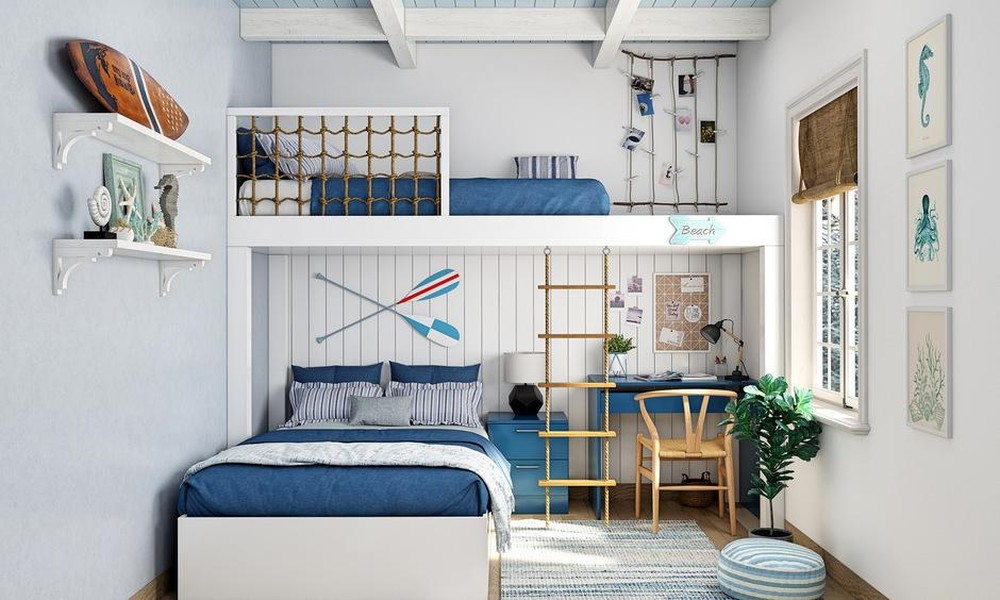
Shared bedrooms can be a real test of patience for both kids and parents. Between limited space, different sleep routines, and the constant buildup of toys and school things, it doesn’t take much for the room to feel messy or overcrowded.
That’s why bunk beds for children are such a popular choice. They save floor space, yes, but more importantly, they help structure the room in a way that actually works for daily life. The key is not just stacking two beds together, but designing a setup that supports comfort, organisation, and a bit of personal space for each child.
Here are nine creative bunk bed ideas that genuinely work in shared bedrooms, especially in compact homes where every bit of space matters.
1. The personalised bunk “zones.”
One of the easiest ways to reduce tension between siblings is to give each child their own defined area.
You can do this by:
- Using different bedding colours or themes
- Adding individual wall decals above each bunk
- Giving each child a small shelf or pocket organiser
It creates a sense of ownership, which helps reduce arguments over shared space and belongings.
2. The study-under-the-bed setup.
This is a practical favourite for school-aged children.
The idea is simple:
- The top bunk is for sleeping
- The bottom bunk space is converted into a study area
Add a compact desk, good lighting, and some wall shelving, and you’ve created a focused homework zone without needing a separate room.
It’s especially useful in smaller homes where a dedicated study room isn’t available.
3. The L-shaped bunk layout.
Instead of stacking beds directly on top of each other, an L-shaped configuration places them at right angles.
This layout:
- Opens up more floor space
- Feels less enclosed than traditional bunks
- Allows room for a desk or storage unit nearby
It also makes it easier for kids to move around without bumping into each other all the time.
4. Built-in storage bunk design.
Storage is often the biggest challenge in shared bedrooms.
A smart bunk setup can include:
- Drawers under the bottom bunk
- Shelves built into the side panels
- Overhead cabinets for extra storage
This reduces clutter and helps keep toys, clothes, and school items organised without adding extra furniture.
5. Individual lighting for each bunk.
Lighting might seem like a small detail, but it can make a big difference in shared rooms.
Instead of relying on a single ceiling light, add:
- Clip-on reading lights
- Adjustable wall lamps
- Soft LED strips for ambience
This means one child can read while the other sleeps without disturbing them.
6. The play-and-sleep combo space.
For younger children, the lower bunk doesn’t always need to be another bed.
You can turn it into:
- A cosy reading nook
- A small play corner with cushions
- A themed “hideout” space
This works especially well if one child sleeps elsewhere or if the family prefers a more flexible setup.
7. Colour-coded organisation system.
A simple but powerful way to reduce chaos is to assign each child a colour.
Use it for:
- Storage boxes
- Bedding and pillows
- Labels on drawers or shelves
It makes it immediately clear who owns what, which helps avoid confusion and arguments over shared items.
8. Integrated wardrobe bunk design.
Instead of placing a separate wardrobe in the room, integrate storage into the bunk bed structure.
This can include:
- Hanging space at the side
- Built-in drawers underneath
- Tall shelving units attached to the frame
It saves floor space and keeps the room layout much cleaner and more efficient.
9. Flexible lower bunk setup.
Not every bunk bed has to be fixed in one configuration.
A flexible lower bunk can:
- Convert into a seating area during the day
- Be used as a guest bed when needed
- Double as a storage or play space
This adaptability is especially useful in smaller bedrooms where space needs change throughout the day.
Why These Ideas Actually Work
What makes these setups effective isn’t just the design, but how they support everyday life.
The best bunk bed arrangements:
- Give each child a sense of personal space
- Maximise vertical storage instead of floor space
- Reduce clutter through built-in solutions
- Adapt to different daily routines
When a room is designed with these principles in mind, it becomes much easier to maintain and far less stressful to use.
Final Thoughts
Shared bedrooms don’t have to feel cramped, chaotic, or constantly messy. With the right bunk bed setup, the same space can become organised, functional, and even enjoyable for kids.
It all comes down to thinking beyond just sleeping arrangements. When you design for storage, study, play, and personal space all at once, the room starts working with you instead of against you.
And in smaller homes, that kind of smart design makes a world of difference.