

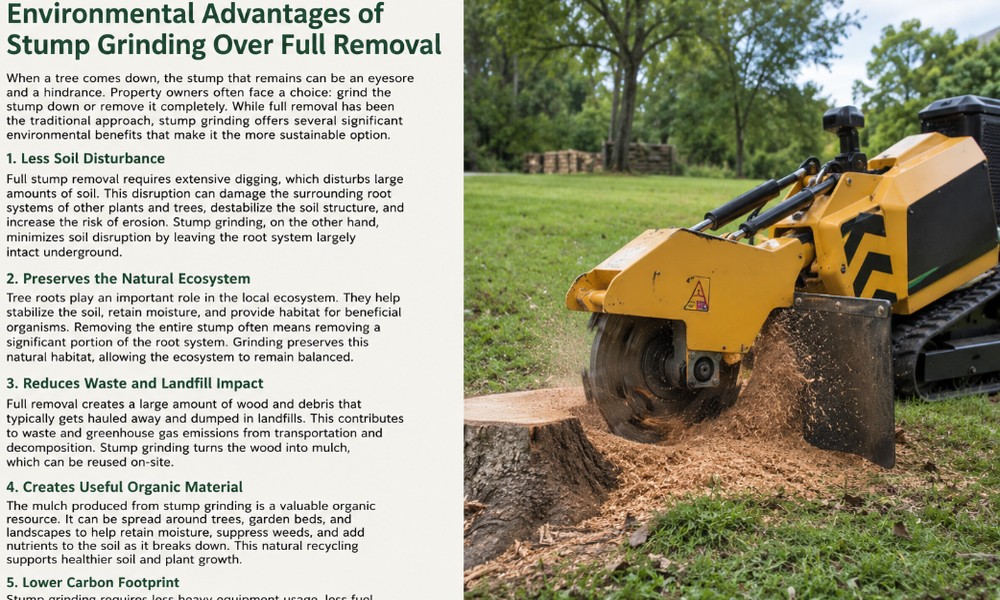
After a tree is cut down, the stump is often the last problem left behind. Some property owners want it gone right away because it looks messy, attracts pests, or gets in the way of landscaping. That makes sense. But there is more than one way to deal with a stump.
Two common options are stump grinding and full stump removal. Full removal means digging out the entire stump and root ball. Stump grinding means shaving the stump down below the surface until it becomes small wood chips. Both methods can clear the visible stump, but stump grinding often has several environmental advantages.
It is less disruptive, creates useful organic material, protects the surrounding soil, and usually leaves the property in better condition.
Stump Grinding Disturbs Less Soil
One of the biggest environmental benefits of stump grinding is that it disturbs less soil. Full stump removal usually requires digging deep around the roots. Depending on the tree size, that can mean pulling up a large section of the yard.
This can damage soil structure. It can also disturb nearby grass, garden beds, shrubs, and small root systems from other plants. When soil is dug up too much, it may become compacted, uneven, or more likely to wash away during rain.
Stump grinding is more focused. The machine grinds the stump in place without tearing out the entire root system. This helps keep the surrounding soil more stable.
It Helps Reduce Erosion
Healthy soil needs structure. Roots, organic matter, and compact layers all help hold the ground in place. When a stump and its large roots are fully removed, the soil around that area can loosen quickly.
Loose soil is easier for rainwater to move. On sloped yards or properties with drainage issues, this can increase erosion. Even in flat yards, the hole left behind after full removal usually needs to be filled and leveled.
With stump grinding, most of the surrounding ground stays intact. The remaining roots slowly break down underground, which can help limit sudden soil movement. It is not perfect in every situation, but it is often gentler on the landscape.
Wood Chips Can Be Reused as Mulch
Stump grinding creates wood chips. Instead of hauling the entire stump away as waste, those chips can often be reused on the property.
Wood chips can work as mulch around trees, shrubs, and garden beds. They help retain soil moisture, reduce weed growth, and slowly add organic matter back into the soil as they decompose.
This is one of the simpler benefits, but it matters. Reusing material on-site reduces waste and supports a more natural yard cycle. Instead of removing everything from the property, stump grinding turns part of the old tree into something useful.
Less Heavy Digging Means Less Landscape Damage
Full stump removal may require larger equipment, deeper digging, and more cleanup. This can be hard on the surrounding landscape. Lawns may get rutted. Irrigation lines may be disturbed. Nearby plants may be damaged.
Stump grinding usually requires less invasive equipment and a smaller work area. The process still needs care, of course, but it generally causes less damage than digging out a full root system.
For homeowners trying to protect gardens, grass, or nearby trees, that smaller footprint can make a real difference.
It Supports Natural Root Decomposition
When a stump is ground down, some roots remain underground. Over time, those roots decay naturally. This slow breakdown adds organic material back into the soil.
Some people see remaining roots as a problem. In certain cases, they can be. But in many yards, natural decomposition is not harmful. It allows the underground material to return to the soil gradually instead of being pulled out all at once.
This slower process can be better for soil life, including beneficial fungi, insects, and microorganisms that help break down organic matter.
It Can Reduce Waste Hauling
Full stump removal often creates bulky waste. The stump, root ball, dirt, and debris may need to be hauled away. That can mean more disposal work, more fuel use, and more disturbance to the property.
Stump grinding can reduce the amount of material that needs to leave the site. Since much of the stump becomes wood chips, the material can often stay on the property and be reused.
This is a practical environmental benefit. Less hauling usually means fewer emissions, less landfill or debris-site use, and less cleanup disruption.
It Helps Prepare the Area for New Landscaping
A ground stump is easier to cover, level, and replant around. Once the stump is ground below the surface, the area can often be filled with soil and used for grass, mulch, flowers, or a new landscape feature.
Full removal also opens space, but it may leave a larger hole and more disturbed ground. That area may settle over time, especially if it is not filled correctly.
Stump grinding creates a cleaner transition. The area can return to a more natural-looking condition without major excavation.
Final Thoughts
Stump grinding is not always the right choice for every property. Sometimes full removal is needed, especially if construction, underground utilities, or replanting a large tree in the same exact spot is planned. But for many yards, stump grinding offers a more environmentally friendly option.
It protects soil, reduces erosion risk, reuses wood material, limits landscape damage, and avoids unnecessary waste hauling. It is a practical way to remove the visible stump while allowing the land to recover more gently.
For property owners who care about both safety and the environment, stump grinding is often a smart middle ground. It solves the problem without causing more disturbance than necessary.
This post was written by a professional arborist at Tree Removal Largo FL. Robert Miller is the owner of Arbor Wise Professional Tree Care, a locally owned and operated tree service company that offers superb lawn care by the most experienced Arborists. Arborwise Tree Services is a tree removal company that offers stump removal, tree pruning, stump grinding, fertilization, and tree restoration. We have an extraordinary lawn care industry notoriety covering the Pinellas county area.