

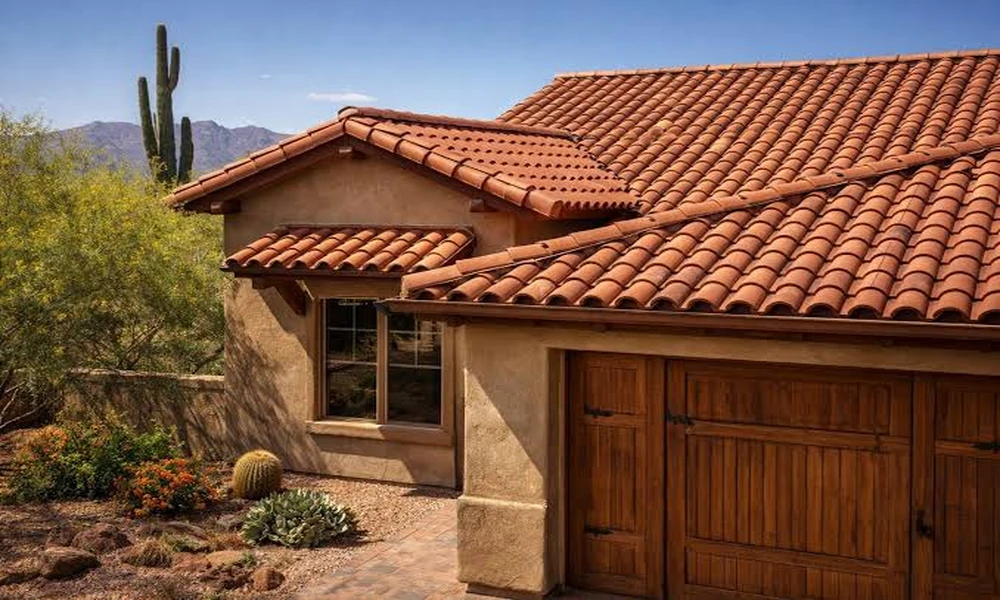
Drive through Johnson Ranch, Copper Basin or Circle Cross Ranch and most of the roofs still look fine from the street. The concrete tiles are faded but whole, the ridges are straight, and nothing appears to be wrong. The problem with many of these homes, built during the housing boom of the mid 2000s, is the layer underneath. Twenty years of Pinal County sun have dried out the felt under those tiles, and that felt is what actually keeps the water out.
Search for San Tan Valley of roof installation and you’ll find plenty of companies and very little explanation of what the work involves. Baker Roofing is owned by Matt Baker and works on homes and commercial buildings across Arizona and Utah, with tile, shingle and metal crews and more than 25 years in the trade. The company offers free estimates and says it replies within one to two business days. Reviewers mention daily cleanup and smaller jobs finished in a day or two. Whoever you hire, it helps to know what a typical installation week looks like, so this piece walks through one.
The Paperwork Comes Before the Ladders
San Tan Valley isn’t an incorporated town, so building permits come from Pinal County rather than a city hall. A full reroof or an underlayment replacement normally needs a permit, while small patch repairs usually don’t. Your contractor should pull the permit, and you should see the permit number before any tiles come off.
The homeowners association is the second checkpoint. If the plan is to reuse the existing tile, a process roofers call a lift and relay, most associations treat it as maintenance because the roof will look the same afterward. Switching to a new tile profile or color, or to shingles or metal, usually means submitting samples and waiting for the architectural committee to approve them. That wait can add weeks, so start it early.
Solar is the third issue, and it catches a lot of people off guard. Many homes here have leased or financed panels, and those panels have to come off before the roof work and go back on afterward. Lease agreements often require the solar company or an approved installer to handle that. Call them early and ask about fees, scheduling and what happens to your warranty. Otherwise you may find yourself waiting on the solar company with your roof half finished.
Before signing, look up the roofer’s license with the Arizona Registrar of Contractors. Arizona lets unlicensed handymen take jobs only under a small dollar limit, and a roof replacement is far above it. Hiring a licensed contractor for work on your home also gives you access to the state’s recovery fund if the job goes badly wrong.
Morning One and the Great Unstacking
In summer, crews often start at first light, because by early afternoon the tiles are too hot to handle comfortably. On a lift and relay, the tiles come off by hand and get stacked on the roof or on pallets in the yard. Some tiles crack in the process no matter how careful the crew is, and older tiles become more brittle with age. A good contractor accounts for this in the estimate with a set allowance for breakage.
With the tiles off, the old underlayment shows how it has held up. Felt from the boom years often tears at a touch, crumbles at the eaves and has turned brittle around nail holes. The wooden strips the tiles hang on, called battens, may be warped or rotted where water has been getting through for years without anyone noticing.
Reading the Wood Underneath
Once the old felt is stripped off, the roof deck is exposed. This is the most important hour of the job, because problems that were hidden are now in plain view. Expect the crew to walk the deck and check a few common trouble spots.
Plywood or OSB sheathing that has separated into layers or turned soft gives under your foot and has to be cut out and replaced. Water stains around plumbing vents and chimneys point to flashing that failed long ago. The low corners where valleys empty onto the roof below tend to rot first, because they take the heaviest flow during a monsoon downpour.
Ask the contractor to photograph any damaged decking before it’s replaced. Most estimates price replacement sheathing per sheet, and photos let you see what you’re paying for and why.
Drying In Against the Next Storm
This is where the new roof really gets built. The materials vary by crew and manufacturer, but a well built underlayment system usually goes on in this order.
- New metal drip edge goes along the eaves so water sheds cleanly into the gutters or off the edge.
- Two layers of heavy felt or a high temperature synthetic underlayment are laid over the deck, overlapped so each course sheds water onto the one below.
- New metal valley channels and wall flashings go in, replacing whatever the original builder used.
- Pipe flashings are replaced, since the old ones have usually cracked or been chewed by birds.
- New battens and a bird stop strip along the bottom edge keep pigeons from nesting under the first row of tiles.
Timing matters here. From mid June through September, monsoon storms can arrive in the late afternoon with little warning. Crews that understand local weather dry in each section the same day they open it, so no part of the house sits exposed overnight.
Tiles Back Where They Belong
Reinstalling the tiles is slower than taking them off. Each one is set in its row, and many are fastened with nails, screws or clips, depending on wind exposure and the manufacturer’s instructions. Cracked tiles get replaced, and matching them is a challenge in older neighborhoods. Some profiles from the early 2000s are no longer made. When that happens, roofers take sound tiles from less visible slopes for the front of the house and put the closest available match on the back.
Ridge and hip caps get special attention. Older homes often had them set in mortar, which cracks over time and lets water in at the peak. Many installers now use a dry ridge system with a ventilated underlayment and mechanical fasteners. It holds up better as the roof expands and contracts with the temperature, and it lets the attic vent more freely.
The Flat Spots People Forget
Many houses in the area have a flat or very low slope section somewhere, usually over a back patio or a room addition. Tile can’t go on these areas, so they get a different system, such as a modified bitumen membrane, a reflective coating or sprayed polyurethane foam. Because these sections sit out of sight, they’re often skipped when a reroof is quoted. Make sure the estimate covers them, since a new tile roof that drains onto a failing flat section will still leak into the patio room.
Inspection Day and the Years Ahead
Once the roof is finished, the county inspector checks the work against the permit. The solar panels can then be remounted, and the crew should run a magnet sweep over the yard and driveway to pick up stray nails. Hold back the final payment until you have the inspection sign-off and a written warranty that spells out what it covers on labor and on materials.
A lift and relay done this way should keep the house dry for another twenty years or more, and the concrete tiles will likely last longer still. After that, checking the roof every few years is usually enough. Look for slipped or cracked tiles after hard storms, keep the valleys clear of debris, and have someone check the flat sections before each monsoon season.