

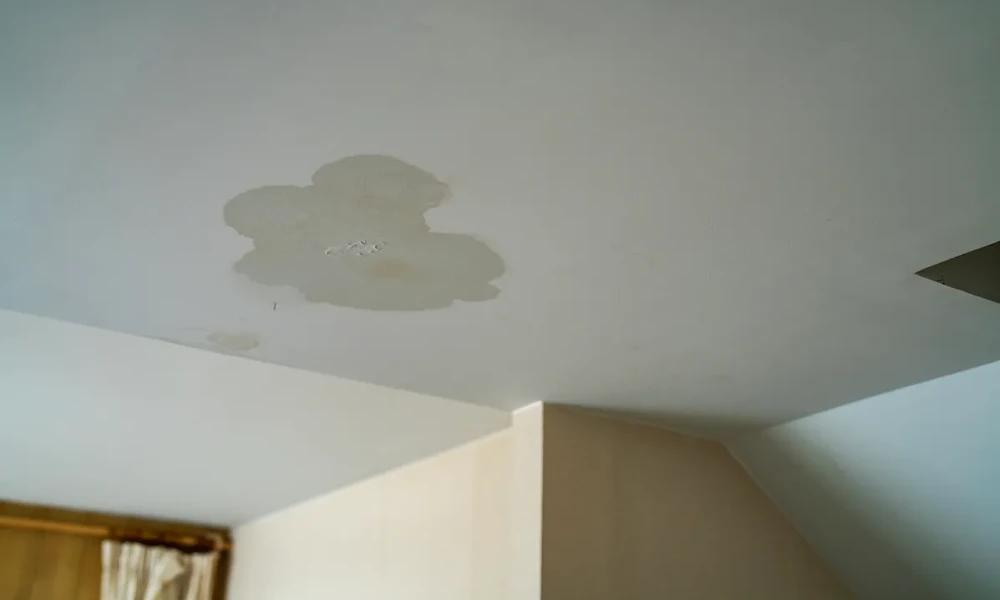
The first sign of a roof leak is rarely a drip. More often it is a faint brown ring on the ceiling, a bubble in the paint near a corner, or a musty smell in a closet that nobody can quite place. By the time water is actually falling into a bucket, it has usually been finding its way inside for weeks.
What surprises most homeowners is how far that water can travel before it shows up. A leak that appears above the living room couch might start six feet uphill near a plumbing vent, run along a rafter, soak into insulation and finally drop where the drywall gives way first. Patching the roof directly above the stain often fixes nothing.
That gap between where water enters and where it appears is the reason so much Nashville roof leak repair work begins in the attic with a flashlight rather than on the shingles with a caulk gun. Middle Tennessee gets close to 50 inches of rain in a typical year, along with spring storm lines, summer downpours and winter freeze and thaw cycles, so roofs here get plenty of chances to reveal their weak points.
Why Water Rarely Drips Straight Down
Roofs are built in layers. Shingles shed most of the water, underlayment catches what slips past, and the wood deck sits beneath both. When water gets through a gap, it follows gravity and surface tension along whatever path it finds. Rafters, roof decking seams, wiring and ductwork all act like small gutters inside the attic.
Insulation adds another delay. Fiberglass and blown cellulose can absorb a surprising amount of moisture before any reaches the ceiling below. That is why a stain can appear days after a storm, or only after a long, slow rain instead of a quick heavy burst.
The Usual Suspects Above Your Ceiling
Shingles themselves are seldom the first thing to fail. Most leaks start where the roof is interrupted by something else.
Pipe Boots and Vents
Plumbing vents pass through the roof inside rubber or neoprene collars. Sun and heat dry that rubber out over time, and once it cracks, water runs straight down the pipe. On many homes these boots wear out well before the shingles around them.
Flashing at Walls and Chimneys
Wherever a roof meets a vertical surface, metal flashing directs water away from the joint. Brick chimneys are especially prone to trouble because mortar joints crumble and old sealant pulls loose. Step flashing along a second story wall can also be missing or installed behind the siding incorrectly.
Valleys
Valleys collect water from two roof planes at once. Leaves and pine needles pile up there, slow the flow and let water back up under the shingle edges during heavy storms.
Skylights and Exhaust Fans
Skylight leaks are often blamed on the glass, but the curb flashing around the frame is usually the culprit. Bathroom and kitchen exhaust caps can loosen or crack in the same way.
Nail Pops and Wind Lifted Shingles
Temperature swings push nails upward over time, lifting the shingle above them. Strong winds can also break the seal strip on a shingle tab, leaving a gap that only leaks when rain is driven sideways.
Tracing a Leak Before Anyone Climbs a Ladder
Homeowners can narrow down the source safely from inside the house, which makes any repair visit faster and more accurate.
- Note when the leak shows up. A leak that appears only during wind driven rain points toward flashing or lifted shingles, while one that appears after any steady rain suggests a pipe boot or valley.
- Go into the attic during or just after a storm, if it is safe to do so, and use a flashlight to look for wet wood, dark streaks or shiny nail tips.
- Follow any water trail uphill along the rafters or decking until it stops. The highest wet point is usually close to where water is getting in.
- Check the insulation directly above the ceiling stain and in a wide circle around it for damp or matted spots.
- Take photos of everything you find, including the ceiling below, before anything gets moved or dried.
Avoid walking on a wet roof. Shingles become slick, and many leak sources can be confirmed later from the attic or with binoculars from the yard.
What Lingering Moisture Does Inside the House
A small leak left alone tends to cause more damage than the roof problem itself. Wet insulation loses much of its value, roof decking can soften and delaminate, and drywall eventually sags. The bigger concern for many households is mold, which can start growing on damp materials within a day or two. The EPA’s guide to mold, moisture and your home explains why drying wet building materials quickly matters and when a cleanup area is too large to handle alone.
Ceiling stains also hide what is happening in places you cannot see, such as inside exterior walls where flashing has failed. If paint is peeling near the top of a wall or baseboards feel soft, water may be running behind the drywall rather than through the ceiling.
Temporary Steps While You Wait
When a leak is active, the goal is to limit damage until a proper repair can be made. Move furniture and electronics out of the way, place a bucket under the drip and, if the ceiling is bulging with trapped water, poke a small hole at the lowest point so it drains in one controlled spot instead of collapsing.
Keeping an eye on the forecast helps too. The National Weather Service office for Nashville posts storm outlooks that can tell you whether another round of heavy rain is coming before a roof can be patched or tarped.
Repair or Replace Comes Down to the Whole Roof
A single cracked pipe boot or loose flashing piece on a roof with plenty of life left is usually a straightforward repair. The decision gets harder when shingles are brittle, granules are piling up in the gutters, the decking is soft in several areas or leaks keep appearing in new places. At that point, a series of small fixes can end up costing more than the roof they are trying to save.
Age matters as well. Asphalt shingle roofs in hot, humid climates often show their wear sooner than the number on the original warranty suggests, especially on poorly ventilated attics where heat builds up beneath the deck.
The most useful habit is simple: look up once in a while. A quick glance at ceilings after big storms, a trip into the attic each spring and fall, and clean gutters through leaf season catch most leaks while they are still small, cheap and easy to trace.